

Travel changes lives, and not only for the adventurers embarking on their next journey. Thousands have benefitted from disaster recovery efforts in their ravaged hometowns, and even several species of plants and animals have escaped the iron grip of extinction thanks to some impressive conservation work.
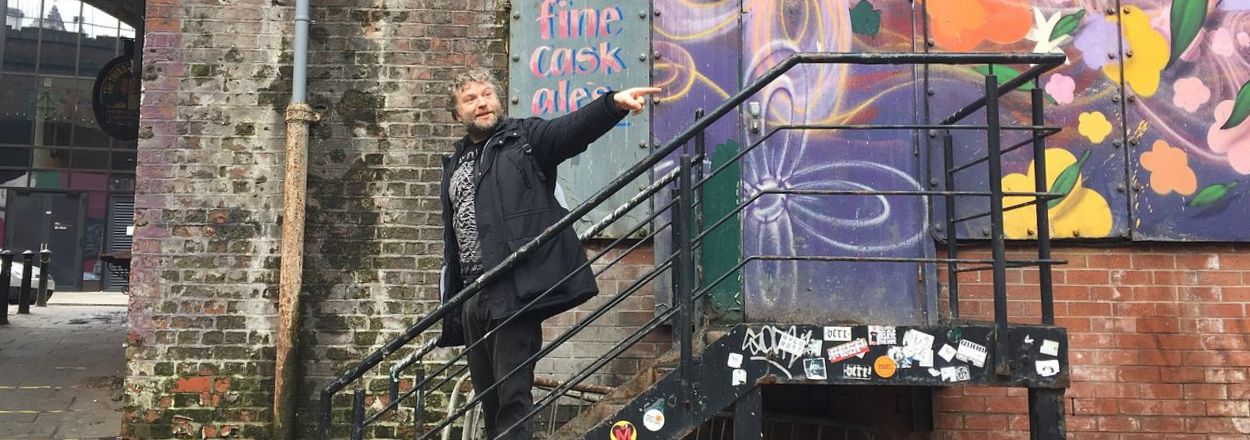
But it’s also tackling unseen barriers, challenging deep-seated stigmas and encouraging conversation around social issues. It starts with organizations like Invisible Cities, where individuals who have experienced homelessness can become tour guides in their own city. By connecting real voices to real stories, the result is a curated itinerary that educates travelers in more ways than one.
From Idea to Impact
Creating Invisible Cities was a labor of love, rooted in years of experience in international homelessness advocacy. For founder and CEO, Zakia Moulaoui Guery, questions like “Why don’t we ever stop to talk to the homeless people in our cities?” and “Why do we walk past, eyes averted and ignore their pleas for spare change?” always lingered.
A 2015 stint traveling and volunteering in a refugee camp provided an answer: it’s often easier to live in ignorance than to learn someone’s story.
Moulaoui Guery saw an opportunity to use travel as a force for good while humanizing the homelessness experience, launching Invisible Edinburgh in 2016. The organization proved successful, and in 2018, the model expanded to other cities.
As she explained in a 2016 TED Talk, “No, [Invisible Cities] won’t change the world, but by making people feel like they are people again, it will definitely change theirs.”
Inside the Program
The transition from homelessness to tour guide takes time and patience, starting with comprehensive training for long-term success.
“The training focuses on transferable skills — first in groups, then on public speaking, confidence building, customer service and storytelling,” Moulaoui Guery said. “We also have first aid and mental health support; this can be anything from breathwork to yoga or mindfulness.”
For some recruits, however, steady employment may not be immediately possible. In those cases, Invisible Cities’ outreach projects, like barbershop pop-ups and care package distribution, become critical.
And, for many, these events also serve as a first introduction to the organization — exactly how current participant Gayle got connected.
“Before I became a guide, I was living in a women’s hostel,” she explained. “I got involved with Invisible Cities through an event called Sparkle Sisters; they provide free haircuts to women in need.”
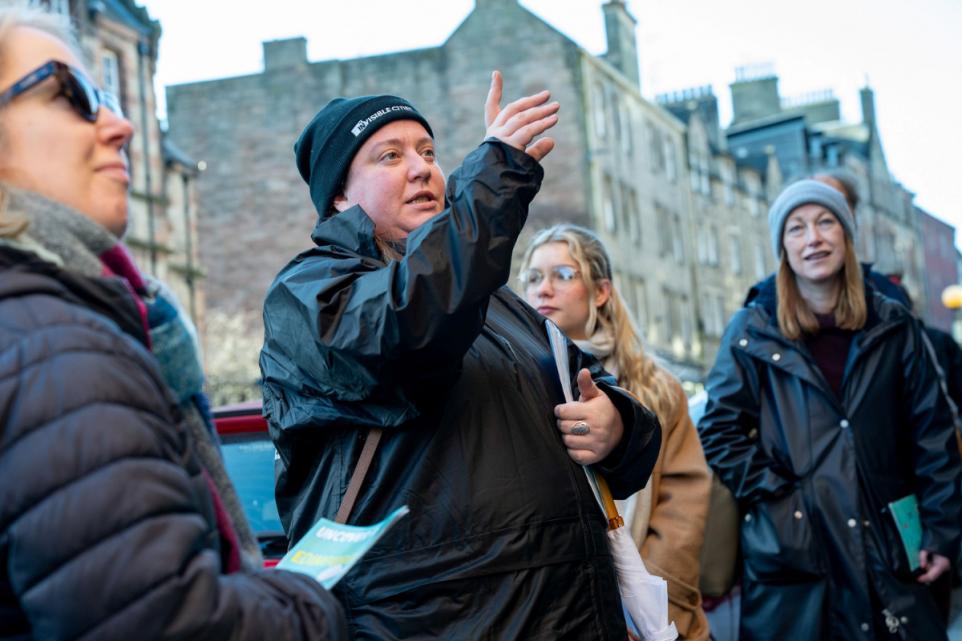
Moulaoui Guery expanded on the importance of these initiatives: “I don’t believe it is fair to ask someone to turn to training consistently when they don’t know where they will sleep at night. Our events are a way to provide dignity and confidence, even if it is only for two hours.”
No matter which walk of life recruits join Invisible Cities from, the opportunity to craft an itinerary and share a personal story is what makes each tour unique.
“Our tours are designed by our guides themselves and explore themes and content they feel passionate about or really want to talk about,” Moulaoui Guery said. “They all touch on more than pure historical facts (also present in our tours) to talk about what it is really like to live in a place with its challenges.”
From start to finish, the training and tour development process takes three to four months. While it requires a great deal of writing and practicing, the routine, consistency and income are transformative.
“Tour guiding has given me self-confidence and the opportunity to learn a lot of new things and see new places like Cardiff, York and Manchester,” said Gayle. “I feel really proud of the women’s tour I wrote by myself.”
The Next Steps
Invisible Cities currently operates in Edinburgh, Glasgow, Aberdeen, Manchester, York, Cardiff, Liverpool, Newport and the Scottish Borders. With 2026 marking their 10-year anniversary, Moulaoui Guery has her sights set on expanding into one more city, bringing their portfolio to 10 destinations by the end of the year — a goal the organization is well positioned to achieve.
Beyond that, Invisible Cities hopes to launch in a European city before 2030, with the U.S. market a long-term aspiration.
“People are the best thing that can happen to anyone,” Moulaoui Guery said in her TED Talk. “I know this to be true because they are the best thing that ever happened to me.”
About the Author




comments