

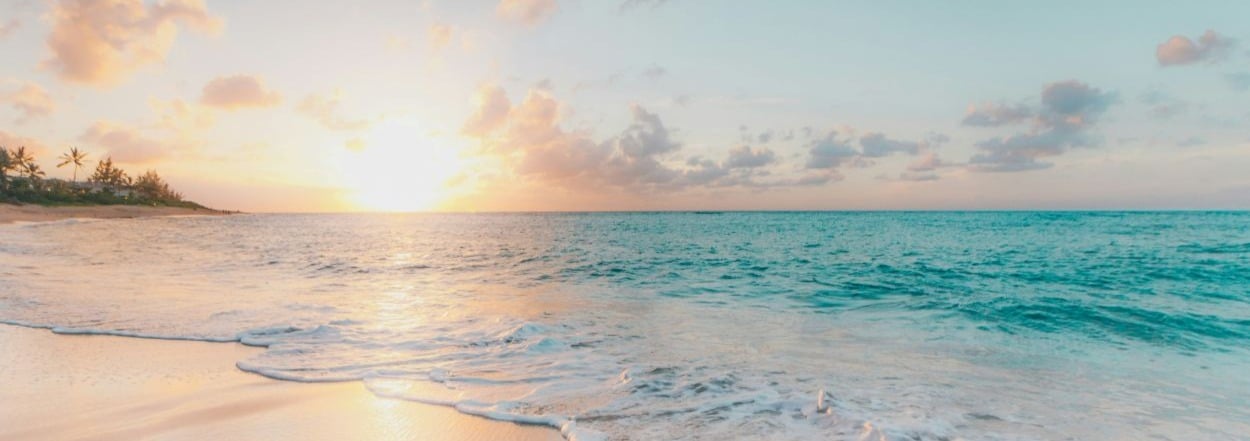
Sparkling shorelines, sands of many colors and wildlife and landscapes that are unlike anywhere else in the U.S., the beaches of Hawaiʻi are truly something to behold. And while there are so many incredible beaches to explore across the Islands of Aloha, we’ve rounded up a handful that stand out for their beauty, unique composition and opportunities for unforgettable adventures. Here are six of the best beaches in Hawaiʻi travelers need to visit.
Hanalei Bay, Kauaʻi
Travelers might recognize images of Kauaʻi’s Hanalei Bay from their social media feeds as the prominent attraction is best-known for its photogenic, crescent moon-like shape. Perfect for active beach-goers, this spot has ample opportunities for surfing, swimming and paddleboarding and is divided into three main sections: Black Pot — great for social activities like volleyball, picnics and general revelry — Wai’oli Beach Park (Pine Trees) — the best place for surfing and enjoying the beauty of the surrounding mangrove trees — and Waikoko Beach — a secluded stretch far from Hanalei Bay’s more crowded areas. Those looking to learn more about the island’s diverse ecosystem can visit nearby botanical gardens and wildlife sanctuaries while the town of Hanalei Bay’s art galleries, craft fairs and music venues offer a taste of local culture.
Punalu‘u Black Sand Beach, Big Island
Swapping classic yellow sands for a dramatic, ever-shifting volcanic landscape, vacationers won’t want to miss their chance to visit Punalu‘u Black Sand Beach, one of the most notable black sand beaches in Hawaiʻi. While not prime for swimming, Punalu‘u Black Sand Beach is a great place to gather for a picnic before strolling along the unique coastline. While they’re there, visitors will want to keep their eyes peeled for giant green sea turtles as they frequent the area year-round.
Lanikai Beach, Oʻahu
A beach known for its soft, white sand, bright blue waters and famously calm conditions, Oʻahu’s Lanikai Beach is ideal for activities like swimming, snorkeling and kayaking. On land, hiking and biking are popular options, while the nearby town of Kailua has a variety of restaurants, cafes and shops for travelers to explore. Mild waves and a weak current make this spot especially beloved among families, and, if they’re lucky, they might even spot a Hawaiian Green Sea Turtle as the famed reptile is often found at Lanikai Beach munching on algae and swimming amongst colorful fish near the coral and rocks. Visitors won’t want to miss their chance to wake up early and catch a sunrise, while the sunsets over this stretch of powder are equally magical.
Papohaku Beach, Moloka‘i
On the other end of the spectrum on the island of Moloka‘i is Papohaku Beach, one of Hawaiʻi’s largest white sand beaches at nearly 300 feet wide and three miles long. Ideal for those who want to escape the crowds and hustle and bustle of the prevailing tourist spots, there’s plenty of room here to kick back and relax as Papohaku Beach has low foot traffic and incredible, secluded views. By way of activities, Papohaku is great for camping or enjoying an oceanside picnic.
Learn More About Hawaiʻi on The Compass on VAX
- Answering Your Questions About Traveling To Hawaiʻi
- Discover Paradise at These Underrated South Pacific and Hawaiian Islands
- How To Successfully Sell Hawaii
- Your Guide To Local Hawaiʻi
- Five Fun Family Experiences in Kaua’i
Hulopo‘e Beach Park, Lāna‘i
Another great choice for animal lovers, Lāna‘i’s Hulopo‘e Beach Park is cherished for its promise of outstanding snorkeling, lively tide pools and chances for spotting spinner dolphins off the shore. Just a short walk away awaits Pu‘upehe, a grand, 80-foot-tall basalt sea stack commonly referred to as “Sweetheart Rock” by locals, and vacationers won’t want to miss their chance to see what is widely believed to be one of Lāna‘i’s most magnificent natural landmarks.
Papakōlea Green Sand Beach, Big Island
One of the world’s four green sand beaches — alongside those found in Norway, the Galapagos Islands and Guam — Papakōlea Green Sand Beach on Hawaiʻi’s Big Island is a rare sight to behold. The product of an ancient cinder cone, the dazzling green sands of Papakōlea are actually olivine, a mineral rich in iron and magnesium sometimes found after a volcanic eruption when the conditions are just right. Getting to Papakōlea can be tricky as visitors must complete an adventurous, 2.5-mile hike across uneven terrain to enjoy its splendor. Similarly, the beach sometimes closes due to weather or volcanic activity, and travelers are advised to check conditions before visiting.
About the Author



comments