


A referral used to be a straightforward way to land new clients. A past client would pass along your name to a friend; they’d reach out, and you’d move quickly toward a booking.
Today, a referral is just the beginning of a process that happens behind the scenes. Before getting in touch, prospective clients dig deep into your online presence. By the time they land in your inbox, they’ve already decided whether you feel like a fit.
In other words, a referral is no longer a direct path to winning a new client — it’s just the start of a more thorough vetting process. To turn more referrals into bookings, travel advisors need to take control of what clients see during that research phase.
Here’s how to make sure your digital presence works in your favor.
Where Modern Referrals Come From
“A lot of travel advisors are still stuck in this old-school, word-of-mouth referral system, but today, they do need a pipeline with new leads coming in,” said Claire Moorhead, co-founder of Paper Planes Co., a marketing agency that serves founder-led travel businesses. “They need to look at all their different touchpoints to make sure that new clients are reassured and almost ready to book with them before they jump on that discovery call.”
In practice, your entire digital presence needs to quickly show who you are, what you specialize in and why clients trust you.
Those signals also influence how advisors show up in search and recommendations from AI tools, like ChatGPT, Gemini and Claude, which influence how people plan travel and find advisors. According to a 2025 McKinsey report, half of U.S. consumers now use AI tools for research, and nearly half of those users rely on the results when making travel decisions.
But whether someone finds you through a search, a social post or a recommendation (from either a human or an AI tool), they’ll use your entire online presence to validate that choice before reaching out. That’s the nature of the modern referral.
Clear Positioning Sets the Foundation
Clear positioning is the foundation of a strategic online presence for a travel advisor, Moorhead said.
“You need to have a really clear understanding of what your specialty is, who your ideal client is and how you solve their problems — and make sure you have strong messaging about it,” she explained.
Without that clarity, even a strong referral can fall flat. If a potential client lands on your website or social media and can’t quickly understand what you do best or who you can help the most — such as couples, multigenerational families or business travelers — they’re unlikely to feel confident sending you an inquiry. Instead, they’ll keep looking for someone who feels like a clearer match.
Part of the challenge is that much of the content in the travel space looks the same. Instead of just posting the same beautiful destination photos and booking announcements every advisor shares, add some context about why that trip was the right vacation for a specific client, what problem it solved and how you made the experience better. This goes a long way toward helping referrals understand the value you bring and why they should choose you as their advisor.
As Moorhead put it, “I get so frustrated when I’m seeing clients posting, ‘We just sent a client to this destination.’ It misses that deeper level of why people should work with you.”
Build Trust Through Consistency
A strong message is effective as a referral generator only if it shows up consistently everywhere your business appears. If your website positions you as a luxury honeymoon specialist while your Instagram highlights family travel, and your LinkedIn leans more corporate, a potential client may not be convinced you have the right expertise to help them.
Consistency doesn’t mean limiting your expertise; it means presenting it clearly everywhere, said marketing technologist Kha Ly. When your messaging aligns across your website, social media and other platforms, it becomes easier for prospective clients to see you as trustworthy.
Aligned messaging also plays an important role in how your business is surfaced online, especially in AI-powered search engines.
“AI will check if this person is mentioned consistently across multiple platforms before recommending them to users,” Ly explained.
Social Proof Is the New Word of Mouth
Referrals are no longer confined to private conversations. They’re highly visible, usually taking the form of a written testimonial, an online review or a tag in a social media post, Ly said. Yet most advisors don’t tap the No. 1 source for content like this: their past clients.
“I would be horrified to know the percentage of advisors who don’t reach back out to someone after a trip—it’s got to be above 80%,” Ly said.
As a travel advisor, the best thing you can do is connect with a client after a successful trip, send them links to places where they can leave a review (such as a Facebook page or Google business) and let them know how much you would appreciate them writing a testimonial, Ly added. Bonus points if you can get them to include a photo or video of the trip you planned for them.
Then, put those reviews to work. He recommended taking the content from all reviews you get and sharing it widely. That may include pasting the text into the homepage or testimonial page of your website, sharing them in your emails and newsletters or turning it into graphics to share on Instagram and other platforms.
“I would post those individual testimonials at least once a week, maybe make it Testimonial Tuesdays or something like that,” Ly added.
Don’t get discouraged if testimonial-driven social media content doesn’t lead to likes and shares, Moorhead said. This type of content doesn’t usually lead to a lot of engagement, but that’s not the point of it.
“Always post your reviews to reinforce trust,” she said. “That’s the purpose it serves.”
Encourage Clients To Post and Tag You
User-generated content — the photos and videos your clients create on the trips you booked for them and share on social media — plays a similar role to testimonials and reviews in modern referrals. When clients tag you in their posts or mention your services, they’re creating a public record of your work that prospective clients can see and evaluate. This visible validation can be just as influential as a personal recommendation.
To encourage more of that content, Ly suggested giving clients a reason to share. That could be as simple as letting them know their post is a source of inspiration for future travelers. Or, you could level up by running a monthly giveaway or contest for the best post that tags your business, with a prize like travel-related swag or a gift card. Offering an incentive can increase participation and expand your visibility to more prospective clients.
A referral may open the door for a prospect, but your online presence determines whether or not they walk through it. Taking ownership of what people find when they look you up and ensuring it reflects your experience, value and how you’ve helped other travelers signals to clients — and the AI tools they rely on — that you’re someone they can trust with their next trip. That’s the secret to a modern referral that consistently turns into bookings.
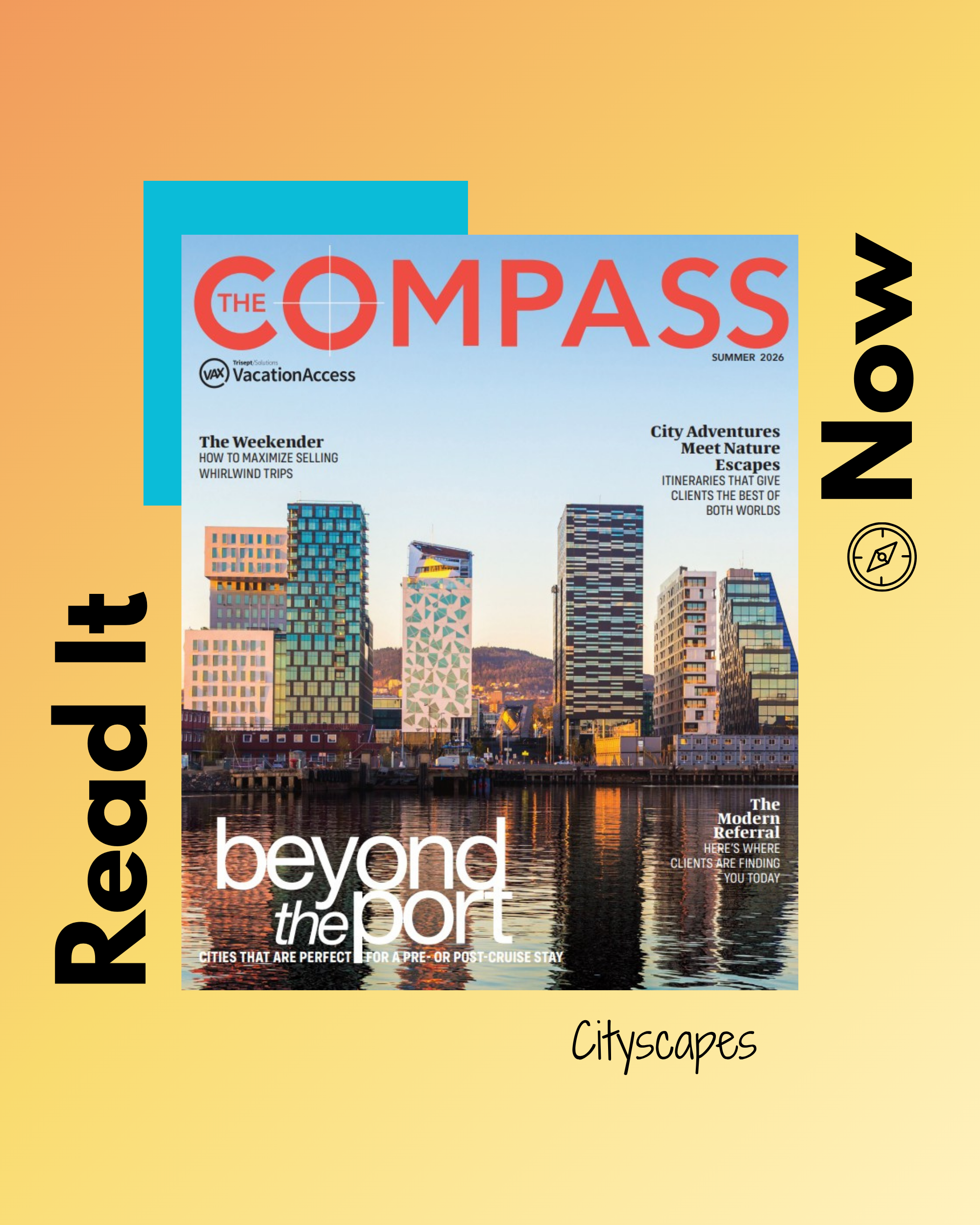
Originally appeared in the Summer 2026 issue of The Compass magazine
Joni Sweet




comments