

For some travelers, there’s no better way to get to know a destination than through its food. For example, in Montreal, its bagels; in New Orleans, its beignets; in New York City, its pizza. Every metropolitan area has a handful of dishes, or a signature standout, that it does better than anywhere else in the world.
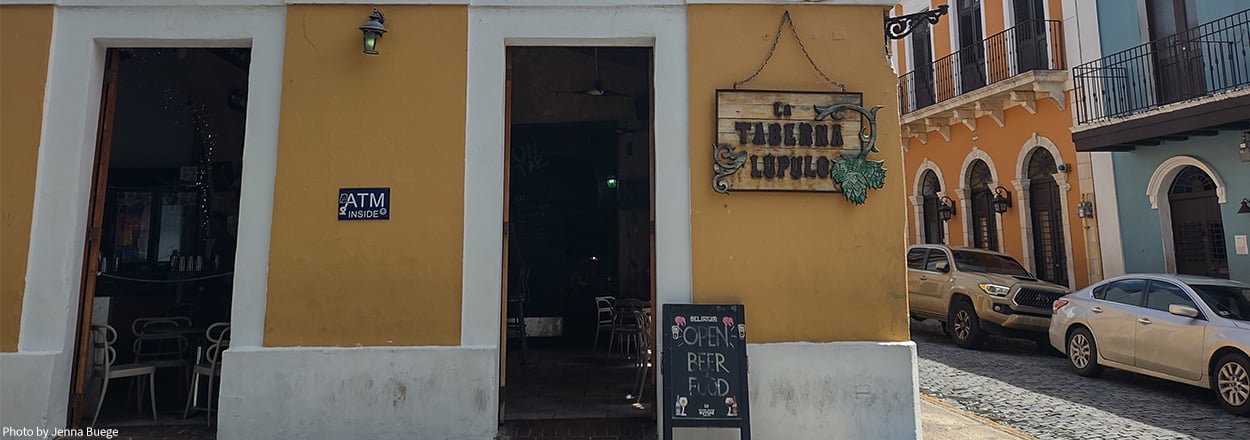
As a casual “foodie,” joining a food tour has become something of a must for me when visiting a new city as I find they’re not only informative and a fantastic way to get my bearings early on in a trip, but they’re also delicious, taking attendees to gems across the destination they likely wouldn’t have found on their own. Seriously, how else would I have sampled some of Puerto Rico’s most incredible Pan de Mallorca, fish tacos and mofongo in one breezy afternoon?
Food tours bring vacationers’ tastebuds along for the adventure, and, of all the ones I’ve joined, there’s one I can’t stop thinking about: Wake Up Reykjavik’s award-winning Reykjavik Food Tour.
“I think people are often surprised by just how varied the food scene is here,” said Ben, a food tour guide with Wake Up Reykjavik for over six years. “Iceland obviously has a very strong connection to traditional foods, seafood and lamb, but Reykjavik’s food scene goes far beyond what people might expect before visiting. That’s one of my favorite things about showing people around on the Food Walk. You can experience traditional Icelandic comfort food, street food and more refined modern Icelandic cooking all within a relatively small downtown area.”
With little to no culinary context heading into our Iceland trip back in 2024, my husband and I were expecting a lot of seafood due to Reykjavik’s coastal location. And while the city certainly knocks seafood out of the park, we found a new obsession in “fish stew,” we were delighted to discover the gastronomic abundance that awaited us. Experiencing the culinary bounty from the comfort of a food tour was the icing on the cake.
“You hear the stories behind what Icelanders eat, where the ingredients come from and how our food has changed over the years,” said Ben. “You also get to sit down, talk to people and experience Reykjavik at a much more local level.”
We followed Wake Up Reykjavik’s advice and joined the company’s food tour our first night in the city, and to say we were blown away by the portions and variety of dishes would be an understatement. While it’s been a few years, and the stops can change, I recall our culinary journey kicking off with a modern fish and lamb pairing, two proteins Ben says every traveler should sample.
“Lamb and our fish has such a strong connection to Iceland and it’s something I always think visitors should try while they’re here,” he said.
Another big highlight was Bæjarins Beztu Pylsur, an iconic eatery in the heart of downtown Reykjavik. Easy to spot with its red and silver exterior — and line that may or may not wrap around the corner depending on the time of day — this little spot is famous for its lamb hotdogs, the likes of which the stand has been slinging since 1937. Traditionally paired with crispy onions, sweet mustard, raw onion, Icelandic ketchup (made from apples!) and remoulade, this unlikely “dog” took us totally by surprise.
By the mid-point of the tour, Wake Up Reykjavik asked everyone to put on a brave face as they presented us with hákarl: Icelandic fermented shark. Dating to times before modern refrigeration, hákarl is typically reserved for special occasions or, in this case, initiating visitors as gritting your teeth and downing a cube of the flaky white meat is considered something of a rite of passage. Traditionally paired with a shot of what Icelanders call “Black Death” to mask its overwhelming ammonia-like scent, hákarl is something best tried in the company of others (for moral support), making it the perfect dish for a food tour.
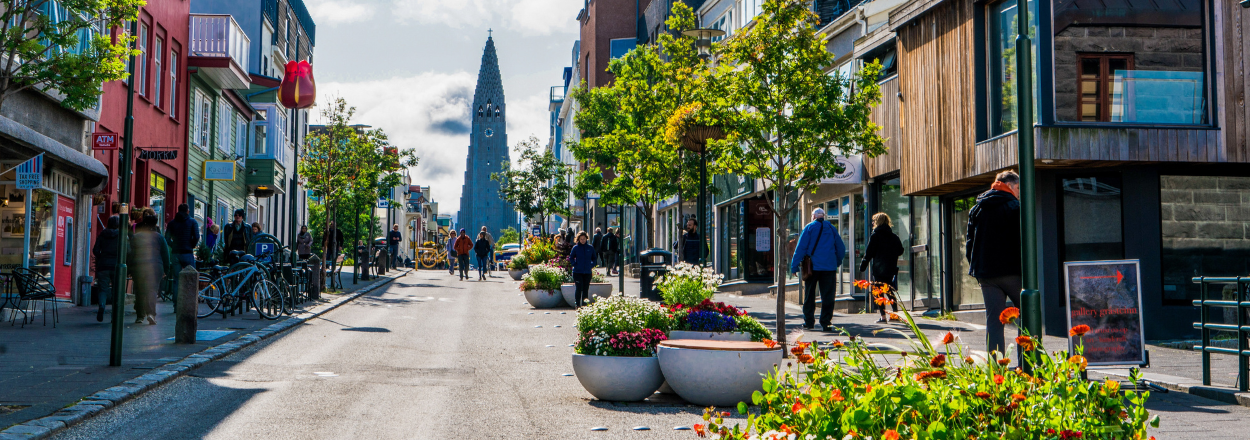
After amassing ancient shark in our bellies and cleansing our pallets with Brennivin (Black Death), it was naturally time for dessert and Wake Up Reykjavik saved one of the city’s heaviest hitters for last (IMO). We continued our stroll downtown until we arrived at Skólavörðustígur, Reykjavik’s photogenic “Rainbow Road,” and made a beeline for Café Loki, a cozy little eatery adjacent to Hallgrímskirkja, the largest church in Iceland and one of the area’s most notable tourist attractions.
Inside, our guide ushered us to the cafe’s upper level where we were greeted with hot tea, a nice touch on a chilly March evening, and rye bread ice cream. Yup, you read that right. A tasty side effect of Iceland’s geothermal landscape, locals have steam baked rye bread in the region’s warm volcanic sand for centuries, and Café Loki took the already delicious loaf to the next level by incorporating it into ice cream, another Reykjavik favorite.
As I recalled Reykjavik’s many culinary delights, I closed by asking Ben an extremely pressing question: If you had to choose between rye bread ice cream, pylsa (Icelandic hotdog) or fish and chips, which would you "kiss, marry or break up with" and why?
“This might be the hardest question,” he said. “Marry: Pylsa. It’s an Icelandic classic. Simple, comforting and something I could happily keep coming back to. Kiss: Rye bread ice cream. Sweet, different and very Icelandic. Definitely worth experiencing. Break up with: Fish and chips. Nothing personal! I love good fish and chips, but if you’re making me choose between the three, somebody has to go.”
For the record, I would kiss Pylsa, marry rye bread ice cream and break up with fish and chips.
When we asked Ben if there was anything else he wanted visitors to know about the culinary scene in Reykjavik he said, “I’d tell travelers not to treat food as something that just fills the gaps between sightseeing. Food is genuinely one of the best ways to learn about Iceland.”
To book Wake Up Reykjavik’s signature food tour, or any of their other incredible guided or small group tours, visit the company’s website.
About the Author




comments