

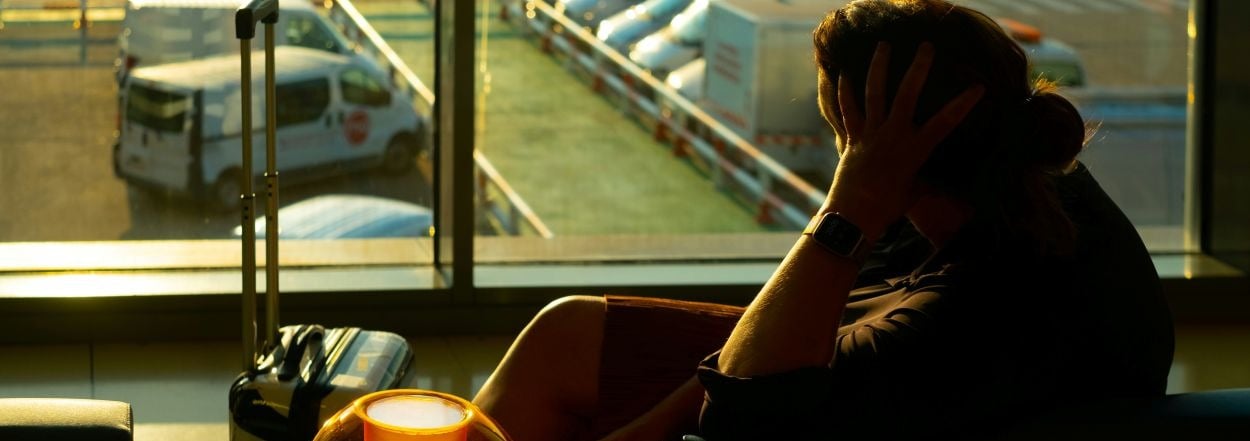
The lack of control, the concept of new, unfamiliar places and the unpredictability of it all, the same things that make travel so exciting can also make the process a little stressful. It’s normal to feel a few nerves before a big trip, but when the travel industry is making headlines, those same nerves can transform into full-on anxiety. Fear can be loud, but it isn’t always accurate. To help put travelers at ease, we’ve rounded up the realities behind four of Americans’ most common travel fears.
The Fear: Flying Isn’t Safe Anymore
Ongoing aviation incidents have left some travelers questioning if flying is truly as safe as experts claim it to be. From poorly behaved passengers and unlikely equipment malfunctions to near misses on the runway to tragic crashes and more, sometimes it feels like you can’t open social media or turn on the news without seeing an anxiety-inducing story fill the screen. For some vacationers, getting on an airplane has become a deal breaker, but is flying really as unsafe as it seems?
The Reality: Air Travel Remains the Safest Form of Transportation
It might not feel like it when you see a scary scene unfolding on TV or online, but air travel has historically been and remains the safest form of transportation. According to a recent story shared by Airbus, Europe’s largest aerospace company, the global commercial aviation network safely transported over five billion passengers across an estimated 35.2 million flights last year. Similarly, while someone who’s afraid of flying has almost certainly heard some variation of “the drive to the airport is more dangerous than getting on a flight,” it’s true as the National Highway Traffic Safety Administration reported that an estimated 17,140 people lost their lives in motor vehicle crashes from January through June last year alone. That’s in comparison to the estimated 548 lives lost in aircraft accidents in 2025, according to data from the Aviation Safety Network.
The anticipation of air travel can invite feelings of stress for many, but moves are being made to make the process even safer for passengers. Take for example the Airspace Location and Enhanced Risk Transparency (ALERT) Act of 2026, an aviation safety bill designed to address critical safety issues following the midair collision between American Airlines Flight 5342 and an Army Black Hawk helicopter at Ronald Reagan Washington National Airport in 2025. Similarly, the Federal Aviation Administration (FAA) is working to update runway technology at 70+ U.S. airports by the end of the year “to enhance air traffic controllers’ situational awareness and reduce runway incursions and close calls,” according to the FAA.
The Fear: People in Other Countries Dislike Americans
No one enjoys feeling disliked, and a common fear among U.S. vacationers is a simple one: that people in other countries don’t like American tourists. Whether they’ve heard that people in Europe view American travelers as “stupid” and “loud” or worry they’ll stand out because of the clothes they wear or the general reputation of the United States at large, concerns surrounding the global perception of the nation and its people are a big concern for many Americans as they prepare for a vacation abroad.
The Reality:
According to a 2025 survey from Upgraded Points where the company surveyed 3,000 people across the U.S. and Europe, one in four Europeans (27%) have a generally negative opinion of American tourists, while 38.2% have a neutral opinion and 34.9% a positive opinion.
The truth is, vacationers can’t prevent residents abroad from labeling American visitors as “loud,” “rude” or “annoying,” but they can work to prove negative associations wrong by being the best possible guests they can be — because after all, what are travelers if not guests in someone else’s home? Before visiting a destination, travelers might consider studying up on local customs and learning some words and phrases in the local language — you don’t need to be perfect, but a little effort goes a long way. Similarly, travelers should be mindful to always clean up after themselves and other members of their group while practicing kindness wherever they go along the way.
Americans who still find themselves concerned about being disliked while away from home should know that for every critical local, there’s another who understands generalizations about a broad group of people are just that: generalizations. In fact, there are many destinations around the world where residents not only welcome U.S. vacationers with open arms but largely depend on their tourism dollars to keep the economy healthy.

The Fear: I’ll Become a Victim of Crime
Pick pockets, robbery, assault and more, the prospect of becoming the victim of a crime while traveling can create serious concerns among U.S. citizens. Vacationers might worry that their tourist status will be obvious, making them an easy mark for wrongdoers. Alternatively, the concept of their luggage, wallet or passport being stolen might be enough to put some people off the idea of traveling altogether while fears of worst-case scenarios like finding themselves caught in the crosshairs of serious affairs like human trafficking, terrorist attacks or organized crime are rightly intimidating.
The Reality:
Criminal activity is an unfortunate reality around the world, and travelers of all nationalities are at risk of becoming the victim of a crime. That being said, there are steps Americans can take ahead of a vacation to ensure their safety and that they know what to do in the unlikely event something goes seriously awry. Two essential resources are the Smart Traveler Enrollment Program (STEP) and travel advisories issued by the U.S. Department of State, both of which keep travelers up to date on the latest news, weather and more in their destination of choice.
Similarly, vacationers can familiarize themselves with the location of and the services offered by U.S. embassies and consulates in their destination as they can help if a U.S. citizen loses their passport, needs medical help, is arrested or becomes the victim of a crime.
In addition to staying current with government-issued advisories and resources, there are some general best practices the U.S. Department of State recommends American travelers follow to avoid crime including leaving fancy clothing and jewelry back home; always booking airport transportation in advance with a trusted company; knowing the location of local police stations and hospitals; sharing their location with loved ones; not telling strangers where they’re staying; remaining alert when visiting bars and nightclubs; never accepting drinks from strangers; staying in well-lit public areas after dark; securing their keys, IDs and other personal items and remaining mindful when using public transportation and trains. Additionally, vacationers are encouraged to read up on common travel scams in advance to be prepared to respond if those situations arise.
The Fear: Public Transport Is Unsafe, Driving Is Intimidating
Most U.S. citizens are largely unaccustomed to riding public transportation, and the idea of hopping on a crowded train or bus to get from point A to point B, especially in a foreign destination, can be overwhelming. Pair this with heavy media coverage of public transit incidents and accidents like people getting pushed onto tracks, attacks on passengers, the spread of sickness and derailments and crashes, and the idea becomes less appealing by the minute. On the flip side, in instances where travelers decide to drive, feelings of anxiety can arise as vacationers find themselves overwhelmed by unfamiliar road signs, rules and regulations — all of which they’re expected to master ahead of their visit. What happens if they get a ticket? What happens if their rental car gets towed? And what happens if they get in an accident that renders them injured or their vehicle totaled?
The Reality:
Like air travel, when you look at the numbers, public transportation is safe. According to an article from Scientific American where the company shared data from the National Safety Council, “The rate of car deaths per 100 million passenger miles in recent years was more than 50 times that of buses, 17 times that of passenger trains and 1,000 times that of air travel.” As far as crime, Scientific American said that while numbers had a brief uptick during COVID, the amount of assaults, robberies and homicides attributed to public transit remain lower than those associated with driving where vehicle thefts, road rage incidents involving weapons and assaults at traffic stops are commonplace. The publication even went as far to say that events like subway attacks and bus crashes receive widespread media attention due to their rareness.
Of course, that doesn’t mean vacationers should abandon their common sense when boarding a bus or subway car. Instead, the U.S. Department of State says American travelers should remain vigilant when using crowded public transportation options. Similarly, the department recommended vacationers download offline maps so they can navigate without an internet connection in addition to traveling with a fully charged phone and portable battery to avoid running out of juice.
Travelers who are pondering the self-drive, rental car route can rest a little easier knowing there are abundant resources to help them up their international driving knowledge. YouTube is an excellent, and free, option for vacationers preparing to get behind the wheel thanks to its countless videos outlining the rules of the road and other must-know details in various destinations around the globe. Similarly, Tripiamo is a company dedicated to creating international driving guides for vacationers, allowing travelers to up their confidence and navigate safely in an unfamiliar land.
About the Author





comments